

Understanding Pain
Pain doesn't always mean something is wrong.
Pain is your body’s alarm system... protective, powerful, but sometimes a little too overprotective. Understanding how it works is key to moving forward with confidence.
Book A Check-In
Pain Is An Alarm System. Not Always A Damage Signal.
“Pain = Alarm” vs. “Tissue Damage = Injury”
Pain is designed to protect you, not punish you.
Sometimes, that alarm system becomes extra sensitive and it starts going off too early or too loudly, even when there's no damage.
This sensitivity is common when pain has been around for a while. The good news? That sensitivity can be retrained and tissues can be made more durable!
Pain is real, but it doesn’t always mean there is serious tissue or structural damage.
Why Pain Can Persist
Pain can hang around longer than expected for many reasons:

Your Nervous System Learned To Protect
The longer pain lasts or the longer it's been there (weeks, months, years), the better your body gets at producing it.

Stress Or Worry
These increase sensitivity, like turning up the alarm volume. This can be work stress, life stress.. any kind of stress.

Poor Sleep
The body and brain are less resilient when under-rested. Sleep is where our body restores itself. Quality sleep is essential for recovery.

Deconditioning
Avoiding movement can make tissues less tolerant over time and pain will be more likely to be easily triggered.

Overtraining
Even good things can be harmful if overdone. Some discomfort is normal, but constantly pushing through pain or overtraining can be a recipe for ongoing pain. We’ll keep it balanced, consistent, and clear to figure out where that balance lies for you; without guesswork.

Beliefs About Pain
If you fear that pain equals damage, your body stays in “protect” mode longer. A suggestion here is to avoid thinking negatively about your pain. Instead of "I'm broken," think "I'm healing and getting stronger." This will help to rewire beliefs around pain and will actually help you in your recovery.
Movement Helps Calm The System
One of the best ways to calm a sensitive alarm system is to move...
gradually and confidently.
Gentle, repeated movement sends your body the message:
“I’m safe. I can move. This isn’t dangerous.”
That’s why we focus on movements that reduce your symptoms and restore your confidence in what your body can do.
Another way I like to think of this is "Sore, but Safe."
I am going to teach you all the ins and outs on how to retrain your system!
What You Can Expect as We Work Together
You’ll learn to:
-
Recognize when pain is just sensitivity, not injury
-
Use movement to calm symptoms
-
Understand what flare-ups really mean (see What to Expect: Healing page)
-
Build trust in your body again
-
How to apply this to running, lifting and moving the way that you want to
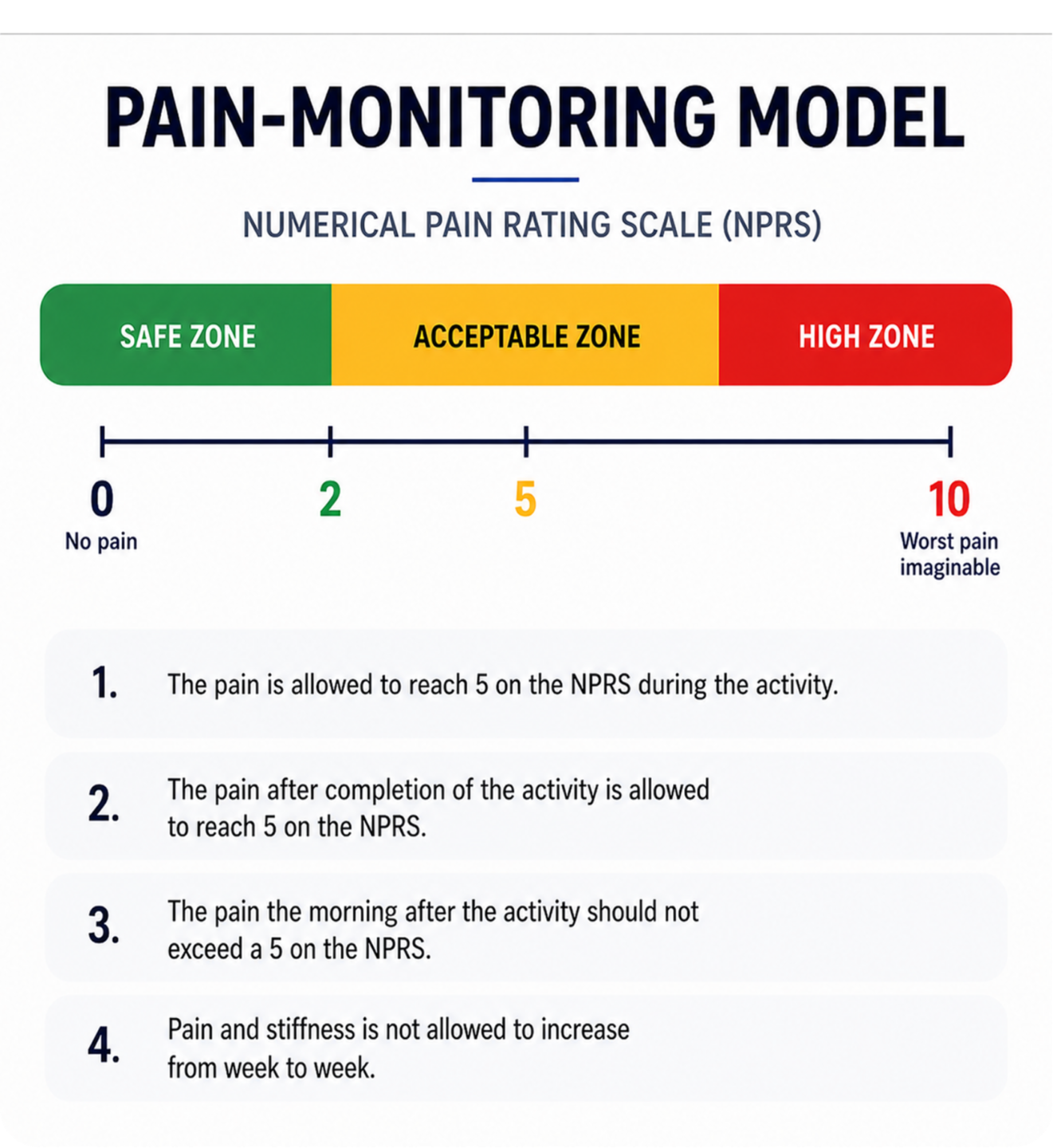
You’ll learn how to use the pain-monitoring model—a simple, research-based way to track how your body responds to movement. We focus on how you feel before, during, and after activities like running, strength, or daily movement.
Book A Check-In
VERSATILE
© 2026 Versatile Physical Therapy and Wellness LLC.